Coca-Cola
Global Supply ChainBenchmarking CMS
Designing a structured survey platform for Coca-Cola's global bottling network
ROLE
Lead UX Designer
SCOPE
Workflow design, role-based UX, prototyping, usability validation
PLATFORM
PowerApps (Enterprise CMS) · Figma (Design Systems, Prototyping)
KEY OUTCOME
Scalable, centralized workflow

Coca-Cola operates a global supply chain with hundreds of bottling facilities, each with its own equipment, workflows, and reporting needs. But the system used to collect benchmarking data across those facilities was far less sophisticated than the operation it supported. Surveys were created in spreadsheets, reviewed through email threads, translated inconsistently, and in some cases printed, mailed, scanned, or faxed back.
What should have been a structured operational process had become a fragile collection of workarounds.
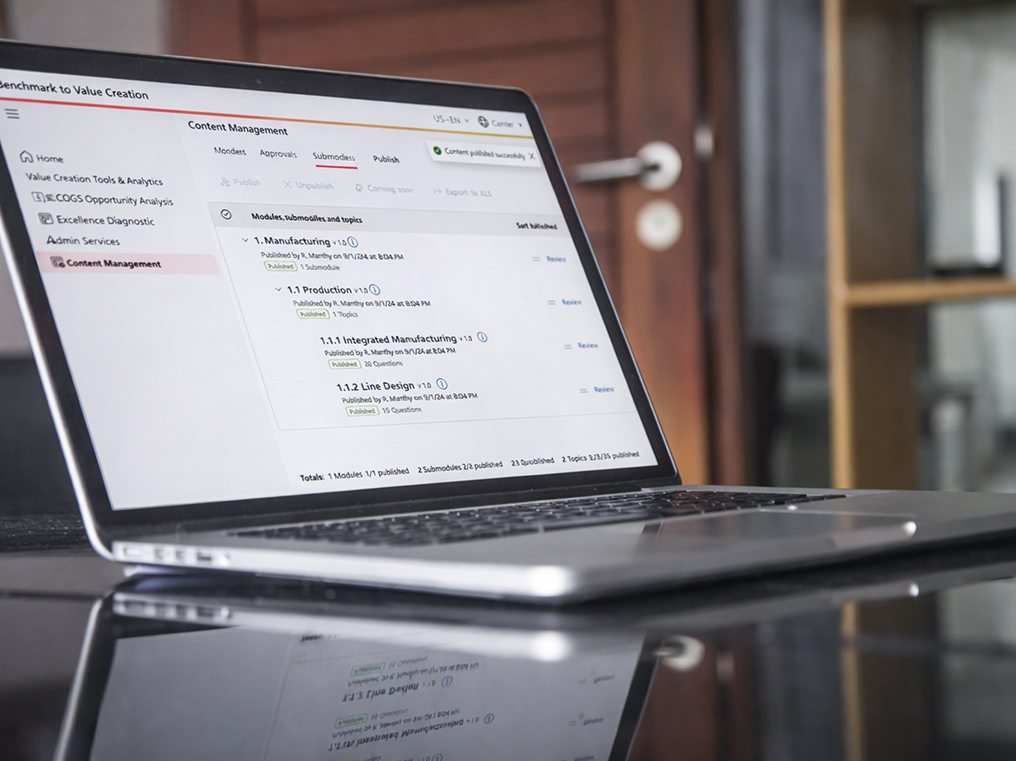
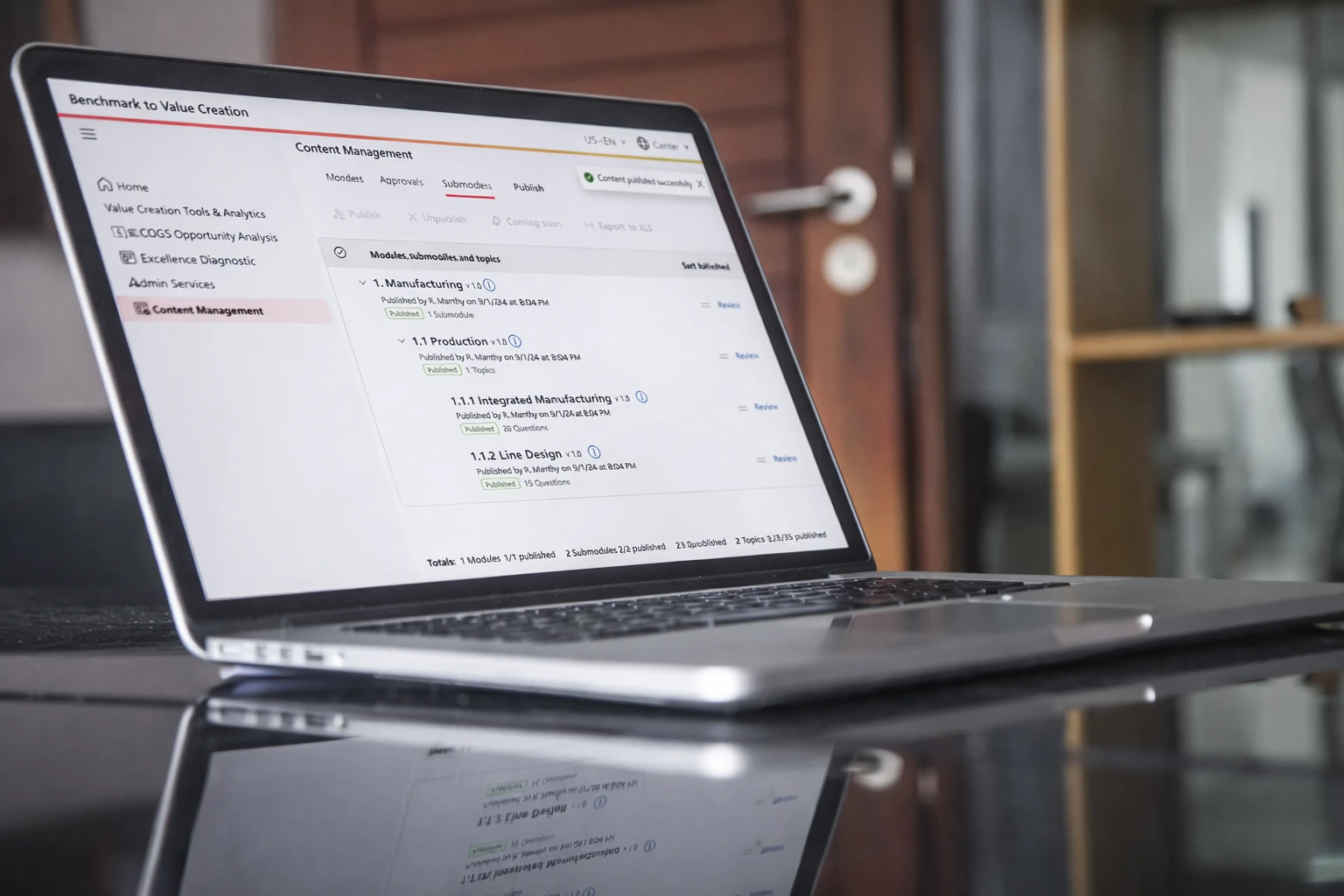
I was brought in to design a content management system that could bring order to that complexity. The goal was to help teams create, approve, translate, and publish surveys more efficiently, while giving leadership a centralized way to understand how facilities were performing and where action was needed.
Built in PowerApps, the solution had to work within platform constraints while still feeling intuitive to users who were deeply accustomed to Excel-based workflows. The challenge was not just to improve the interface. It was to replace an unreliable process with a system people could actually trust.
Executive Summary
Business Outcomes
Platform adoption across target users
Strong uptake after rollout
Faster approval workflows
Reduced delays and bottlenecks
Less manual coordination and fewer engineering handoffs
Simplified operational flow
Outcomes based on stakeholder reporting, workflow analysis, and post-launch operational trends.
System Transformation
From fragmented workflows to a structured, scalable platform

Structural Bottlenecks
Five critical operational friction points compounded across the global organization, creating measurable productivity loss and delaying strategic decision-making.
File Chaos
Multiple uncontrolled versions of surveys created inconsistency and confusion across teams.
Engineers as Publishers
Content updates required developer intervention, creating bottlenecks and delays.
Translation Without Structure
There was no formal localization workflow, leading to inconsistent and unreliable translations.
Wrong Questions, Wrong Facilities
Facilities sometimes received questions that did not apply to their machinery or operating context, hurting data quality.
Static Data, Limited Insight
Leadership had access to information, but not in a form that supported timely decision-making.
Detailed Process
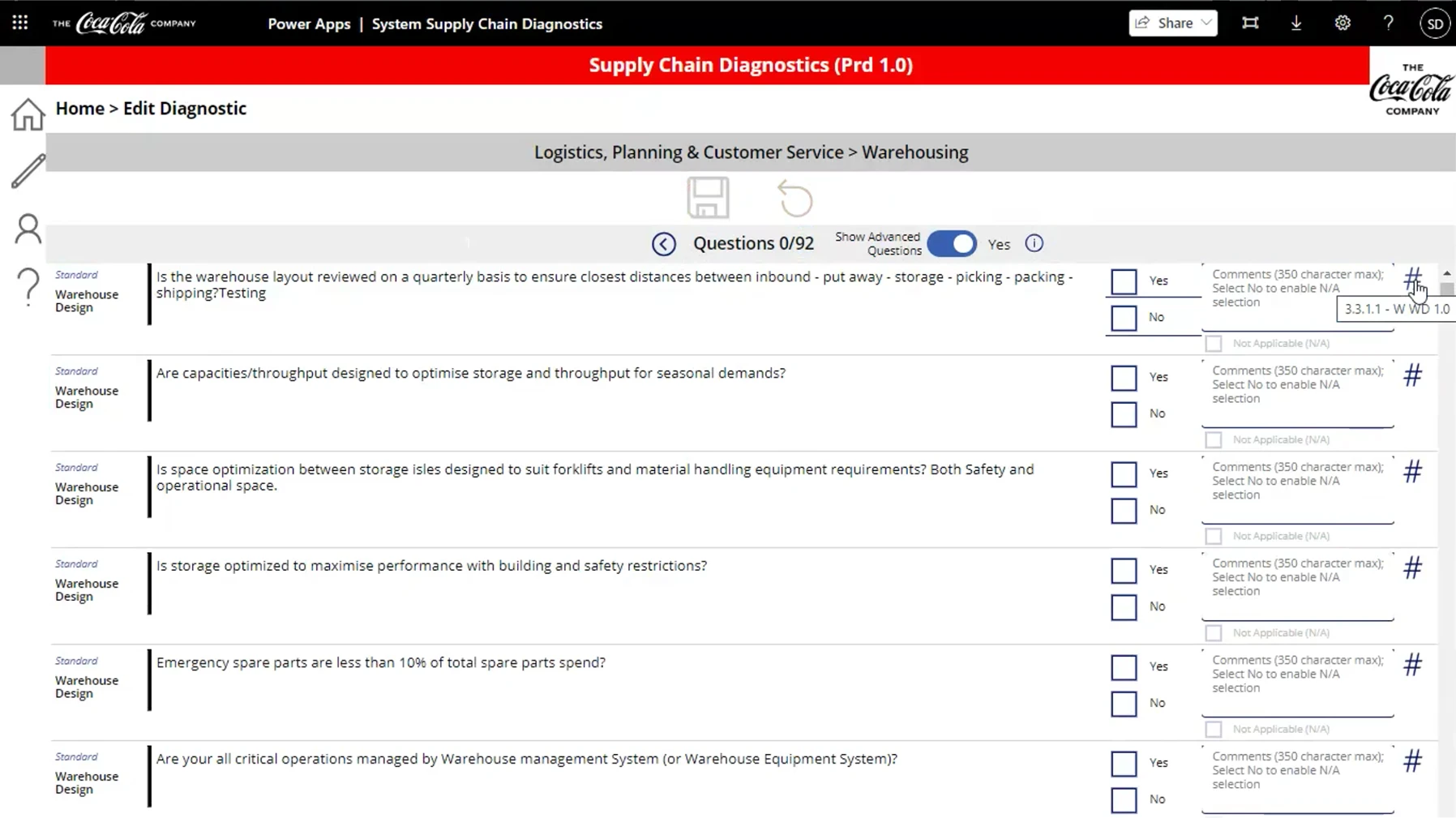
To address these systemic bottlenecks, I designed a structured workflow transformation spanning research, modeling, and implementation.

What I Learned
This project reinforced that enterprise design is often less about novelty and more about replacing fragile habits with systems people can trust.
The best solution was not the one with the most dramatic interface. It was the one that gave each role a clearer path forward without asking users to completely reinvent how they worked overnight.
It also reminded me that operational complexity tends to hide inside familiar tools. A spreadsheet can look harmless on the surface, but when an entire workflow depends on it, it is often carrying far more risk than anyone wants to admit.